

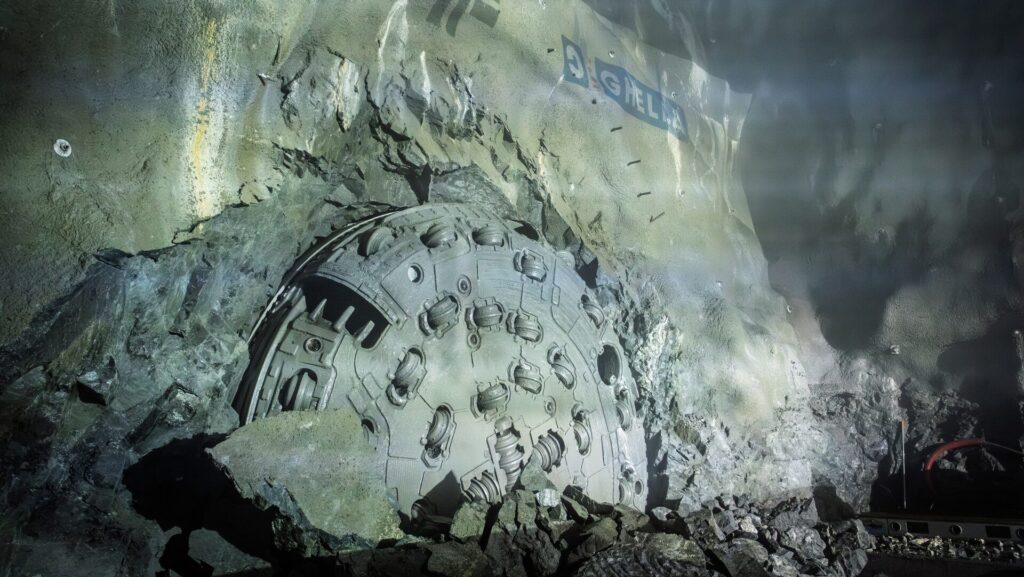
In her doctoral thesis, Mimmi Leite at the National Institute of Occupational Health (STAMI) investigated the amount of dust tunnel workers inhale and how this dust affects their lung health.
“We measured high levels of quartz dust among certain groups. Those working at the very front of the machines were the most exposed,” explains Leite.
Reaching deep into the lungs
The study was conducted during the construction of two parallel railway tunnels through rock containing high levels of quartz.
Quartz occurs naturally throughout large areas of the Norwegian bedrock. When rock is drilled or crushed, small particles are released. Some of these are so tiny that they can reach deep into the lungs.
Long-term exposure to quartz dust can lead to conditions such as silicosis, reduced lung function, and lung cancer.
Exceeded the occupational exposure limit
The workers wore monitoring equipment while on the job, which made it possible to analyse the dust in the air they breathed throughout the workday.

Leite found that one in four measurements of quartz dust exceeded the established occupational exposure limit. The highest concentrations were found near the cutterhead, but workers positioned further back on the machines were also exposed to quartz dust.
The level of dust exposure varied depending on the specific tasks being performed, as well as from day to day. Long-term experience was linked to poorer lung function.
To investigate whether the dust had left a mark on the lungs, Leite followed approximately 500 workers over a two-year period. The participants underwent lung function testing and answered questions regarding their work experience, smoking habits, and respiratory issues. The group included both tunnel workers and employees with little or no exposure to quartz dust.
At the initial assessment, workers with a long history of tunnel work exhibited slightly lower lung function than the comparison group. This difference was most pronounced among those who had worked in tunnels for more than ten years.
When the researchers re-examined lung function two years later, they found no further decline that could be attributed to dust exposure.
“We did not observe any clear change in lung function over these two years. However, this period is too short to draw definitive conclusions about potential long-term health effects,” says Leite.
Reducing dust is essential
Leite also investigated whether there were signs of dust exposure within the small airways.
She analyzed small droplets from the fluid layer that lines the interior of the airways. The samples were collected from 19 tunnel workers exposed to quartz dust and 21 individuals with low or no exposure.
Leite discovered differences in the composition of lipids (fats) in the samples from the two groups.
“This could be an indication that the lungs are reacting to the dust. However, we do not yet know whether these differences have any health implications,” says Leite. She believes the results underscore the need for measures that reduce dust formation and prevent it from spreading on the tunnel boring machines.